
Contraindications
Contraindications are those specific to ERCP and any procedure performed in conjunction with papillotomy. Contraindications for papillotomy include, but are not limited to:
- Coagulopathy
Potential Complications
Possible complications associated with ERCP include:
- Bleeding
- Pancreatitis
- Cholangitis
- Perforation of hollow organs (duodenum, bile duct, or gastrointestinal tract)
- Infection, including abscess formation or sepsis
- Injury to adjacent organs (pancreas, blood vessels)
- Electrosurgical burns
Warnings
- Do not use if the sterile pouch is opened or damaged.
- Do not reuse, reprocess, or re-sterilize the device.
- Reuse, reprocessing, or re-sterilization may compromise device integrity and lead to device failure, potentially resulting in patient injury, illness, or death.
- Reuse or improper processing may also increase the risk of contamination and cross-infection, including transmission of infectious diseases between patients.
- Contamination of the device may result in patient injury, illness, or death.
- After use, dispose of the product and packaging according to hospital, administrative, and/or local regulations.
- Operators and assistants should wear protective gloves to prevent accidental burns. Universal precautions must be followed in all cases.
- All components must be inspected for compatibility and integrity before use. Do not use damaged or defective instruments. Replace any defective device immediately.
- Avoid contact between live electrical components (e.g., push rod) during activation of high-frequency current, as this may result in electrical burns or shocks.
Precautions
- The device is compatible with an endoscope accessory channel of 2.8 mm or larger.
- Ensure compatibility between the guidewire diameter and the inner lumen of the wire-guided device.
- Injection of contrast media during ERCP must be monitored fluoroscopically. Overfilling of the pancreatic duct may increase the risk of pancreatitis.
Procedure
- Before use, inspect the device packaging. Do not use if the packaging is compromised.
- Check device functionality by gently sliding the control mechanism forward and backward.
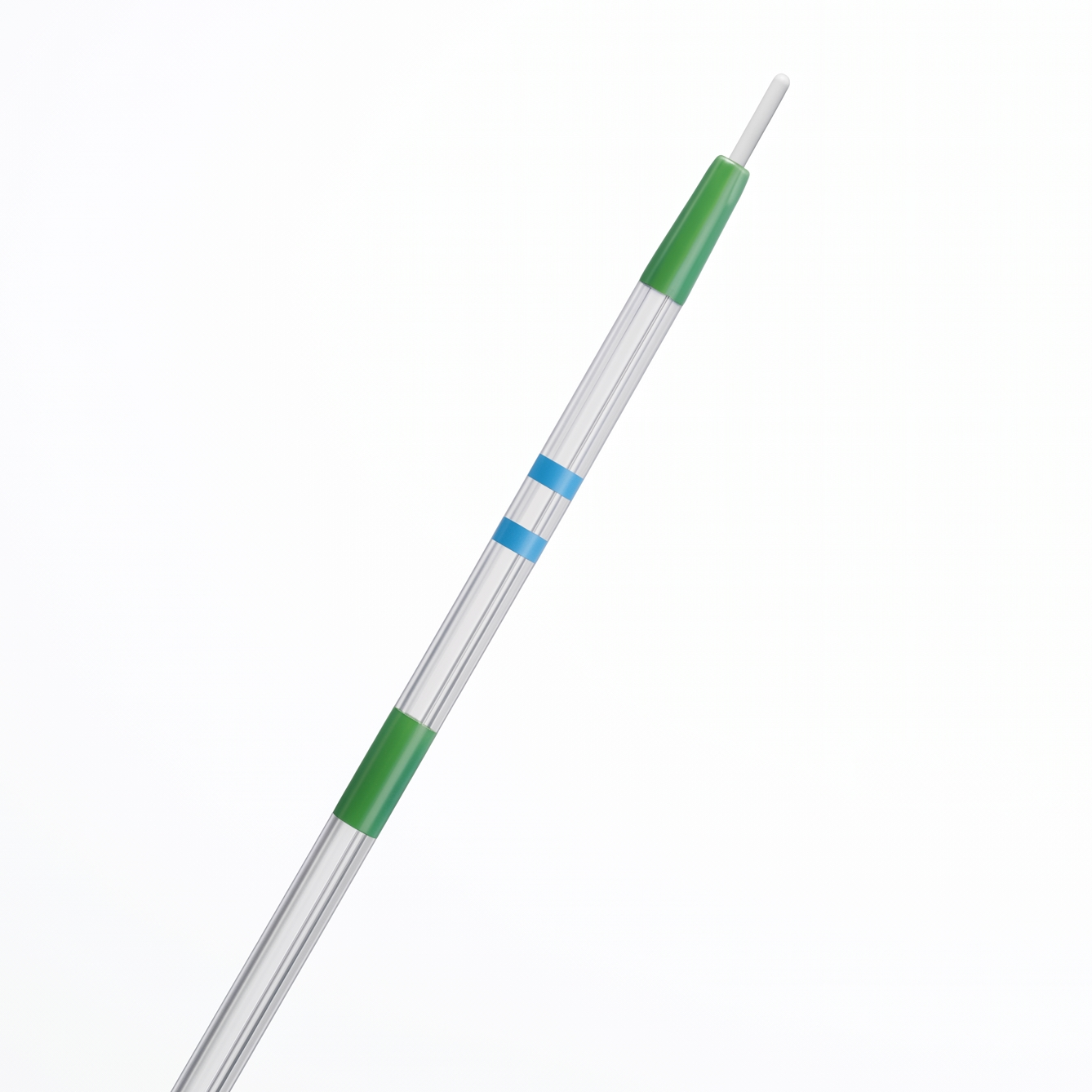
- Inspect the cutting knife/needle for kinks, bends, or any damage.
- Introduce the endoscope into the patient and identify the target site.
- Advance the needle knife through the endoscope’s accessory channel until the distal tip is visible under endoscopic view.
- If resistance is encountered in angled or tilted portions of the scope, gently rotate and adjust the insertion angle to reduce stress on the working channel.
- Once the tip is visible, carefully position it at the target site, typically the papilla or intended incision area for pre-cut or controlled sphincterotomy/papillotomy.
- Use fluoroscopic guidance when necessary to confirm correct positioning before cutting.
- Connect the electrosurgical generator cable to the device using the appropriate active connector.
- Activate the generator using the foot pedal to deliver short, controlled bursts of cutting current. Simultaneously, advance or retract the needle knife using the slider to achieve the desired incision depth and length.
- Keep the knife tip under continuous visual control. Ensure the active portion does not contact the endoscope to avoid electrical damage or short-circuiting.
- After completing the incision and/or sphincterotomy, turn off the electrosurgical generator and disconnect the cable.
- Withdraw the needle knife slowly and carefully, ensuring full retraction of the needle before removal to prevent damage to the endoscope channel.
Change in Performance
If device performance changes or the intended purpose is no longer achieved, further action should be taken at the discretion of the medical specialist, based on the patient’s clinical condition.
Disposal
Dispose of used devices in accordance with hospital, local, and national regulations. Disposal is the responsibility of the user.
Storage
Store the device at room temperature and avoid direct sunlight. Follow a first-in, first-out system and do not use the device beyond its expiry date.
