
Instructions for Use
Intended Use
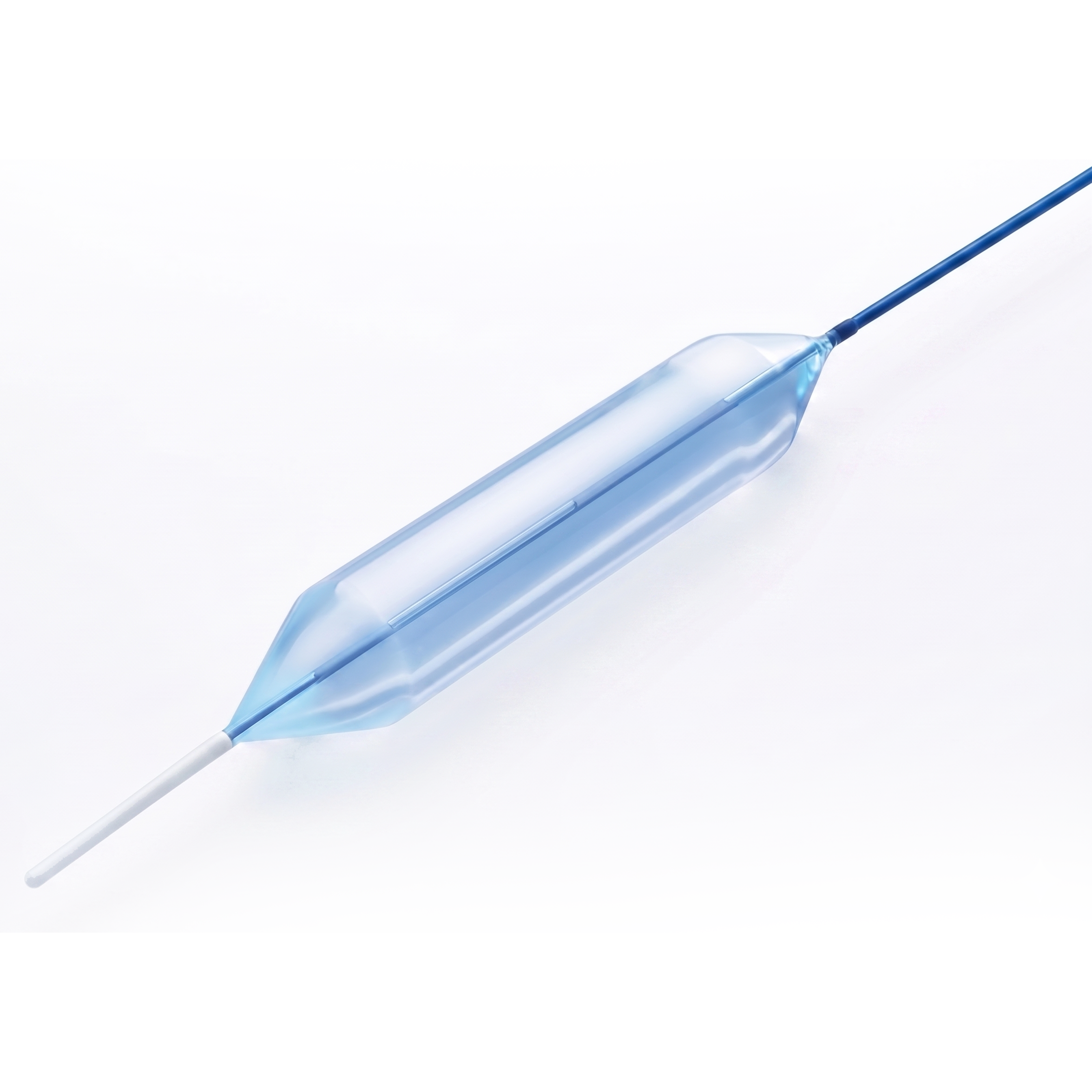
The KINDMED™ Wire Guided Multi-Stage Balloon Dilator is intended for endoscopic dilation of benign or malignant strictures within the gastrointestinal tract, including the esophagus, pylorus, duodenum, colon, and other anatomically appropriate luminal structures.
The device is designed to facilitate controlled radial dilation of strictures under endoscopic and/or fluoroscopic guidance.
The device is supplied sterile and is intended for single-patient use only.
Technical Specifications
| Parameter | Specification |
| Balloon Length | 55 mm |
| Balloon Diameter Range | 6 mm – 20 mm |
| Catheter Length | 230 cm |
| Guidewire Compatibility | Up to 0.035 inch |
| Sterility | EO Sterile |
| Intended Use | Single Use Only |
Available diameter configurations may include:
- 6 / 7 / 8 mm
- 8 / 9 / 10 mm
- 10 / 11 / 12 mm
- 12 / 13.5 / 15 mm
- 15 / 16.5 / 18 mm
- 18 / 19 / 20 mm
Contraindications
Use of the device may be contraindicated in patients with:
- Known or suspected gastrointestinal perforation.
- Severe inflammatory disease at the intended treatment site.
- Extensive fibrosis or scarring preventing safe dilation.
- Inability to advance the device through the target stricture.
- Significant coagulation disorders.
- Asymptomatic strictures not requiring intervention.
- Patients unable to cooperate with the procedure.
The physician should determine suitability for dilation based on individual clinical circumstances.
Potential Adverse Events
Potential complications associated with balloon dilation procedures include:
- Perforation
- Bleeding or hemorrhage
- Aspiration
- Fever
- Local or systemic infection
- Sepsis
- Hypotension
- Allergic reactions
- Respiratory compromise
- Cardiac arrhythmias
- Cardiac arrest
Warnings
- For single use only.
- Do not reuse, reprocess, or resterilize.
- Reuse may result in infection, cross-contamination, device failure, or patient injury.
- Do not use if packaging integrity has been compromised.
- Inspect the device before use for signs of damage.
- Use only by physicians trained in endoscopic balloon dilation techniques.
- Inflate the balloon only with the recommended liquid inflation medium.
- Never inflate the balloon using air, carbon dioxide, or other gases.
- Do not exceed the maximum rated inflation pressure specified on the product labeling.
- Excessive pressure may result in balloon rupture or tissue injury.
- If unusual resistance is encountered, identify the cause before proceeding.
Precautions
- Carefully review all instructions prior to use.
- Verify compatibility with the selected guidewire and endoscope.
- Do not pre-inflate the balloon before insertion.
- Maintain negative pressure within the balloon prior to introduction.
- Ensure the balloon is completely visible before inflation.
- Confirm proper positioning using endoscopic and/or fluoroscopic guidance.
- Use a sterile water-soluble lubricant if required.
- Ensure complete balloon deflation before catheter withdrawal.
- Follow institutional infection-control procedures throughout the procedure.
Instructions for Use
Device Preparation
- Verify product selection and compatibility with the intended procedure.
- Inspect the sterile package and confirm the expiration date.
- Remove the device using aseptic technique.
- Inspect for bends, kinks, or visible damage.
- Do not use a damaged device.
- Prepare the inflation system according to the manufacturer’s instructions.
Device Placement
- Introduce an appropriate guidewire across the target stricture.
- Advance the balloon catheter over the guidewire.
- Position the balloon centrally across the treatment area.
- Confirm positioning using endoscopic and/or fluoroscopic visualization.
- Align radiopaque markers with the target stricture.
Balloon Inflation
- Connect the inflation device to the inflation port.
- Inflate gradually using the recommended inflation medium.
- Inflate to the pressure corresponding to the desired balloon diameter.
- Maintain inflation as clinically indicated.
- Increase pressure progressively if larger diameters are required, without exceeding labeled limits.
Balloon Deflation and Removal
- Completely evacuate all inflation media from the balloon.
- Confirm complete balloon collapse.
- Withdraw the catheter carefully under visualization.
- Inspect the device following removal.
If balloon rupture occurs during the procedure, discontinue inflation immediately and manage the situation according to standard clinical practice.
Change in Performance
If the device demonstrates altered performance characteristics or is unable to perform its intended function, discontinue use and determine further patient management based on physician judgment and clinical findings.
Disposal
After use, the device should be treated as potentially biohazardous waste and disposed of according to applicable hospital, local, state, and national regulations.
Storage Conditions
Store in a clean, dry, and well-ventilated environment.
Protect from:
- Excessive heat
- Moisture
- Direct sunlight
- Organic solvents
- Ionizing radiation
- Ultraviolet radiation
Do not use beyond the expiration date indicated on the package.
Limited Warranty
KINDMED DEVICES PRIVATE LIMITED warrants that this product has been manufactured in accordance with established quality management procedures and applicable manufacturing standards.
Because storage conditions, transportation, procedural techniques, patient factors, and other variables are beyond the manufacturer’s control, no warranty is made regarding clinical outcomes.
The manufacturer’s liability is limited to replacement of defective products. KINDMED DEVICES PRIVATE LIMITED shall not be liable for incidental, indirect, special, or consequential damages arising from misuse, modification, reprocessing, resterilization, or reuse of the device.
Manufacturer
KINDMED DEVICES PRIVATE LIMITED
1st Floor, Plot No. 175B
Dada Nagar Industrial Area
Kanpur Nagar, Uttar Pradesh – 208022, India
KINDMED™ is a trademark of KINDMED DEVICES PRIVATE LIMITED.
