
Technical Specifications
| Working Length (mm) | Min. Working Channel (mm) | Jaw O.D. (mm) | Jaw Edge | Swing | Spike | Coated | Marker |
|---|---|---|---|---|---|---|---|
| 1600 | 2.0 | 1.8 | Plain | N | N | Y | N |
| 2300 | 2.8 | 2.3 | Plain | N | N | Y | N |
| 2300 | 2.8 | 2.3 | Plain | N | Y | Y | N |
| 2300 | 2.8 | 2.3 | Toothed | N | N | Y | N |
| 2300 | 2.8 | 2.3 | Toothed | N | Y | Y | N |
| 2300 | 2.8 | 2.3 | Plain | N | N | Y | N |
| 2300 | 2.8 | 2.3 | Plain | N | Y | Y | N |
| 2300 | 2.8 | 2.3 | Toothed | N | N | Y | N |
| 2300 | 2.8 | 2.3 | Toothed | N | Y | Y | N |
Instructions for Use
Intended Use
The KINDMED™ Biopsy Forceps are intended for endoscopic acquisition of tissue specimens from the gastrointestinal tract for histological examination and diagnostic evaluation.
The device is designed for use through the working channel of compatible endoscopic instruments and enables controlled tissue sampling during gastrointestinal endoscopy procedures.
The device is supplied sterile and intended for single-patient use only.
Device Description
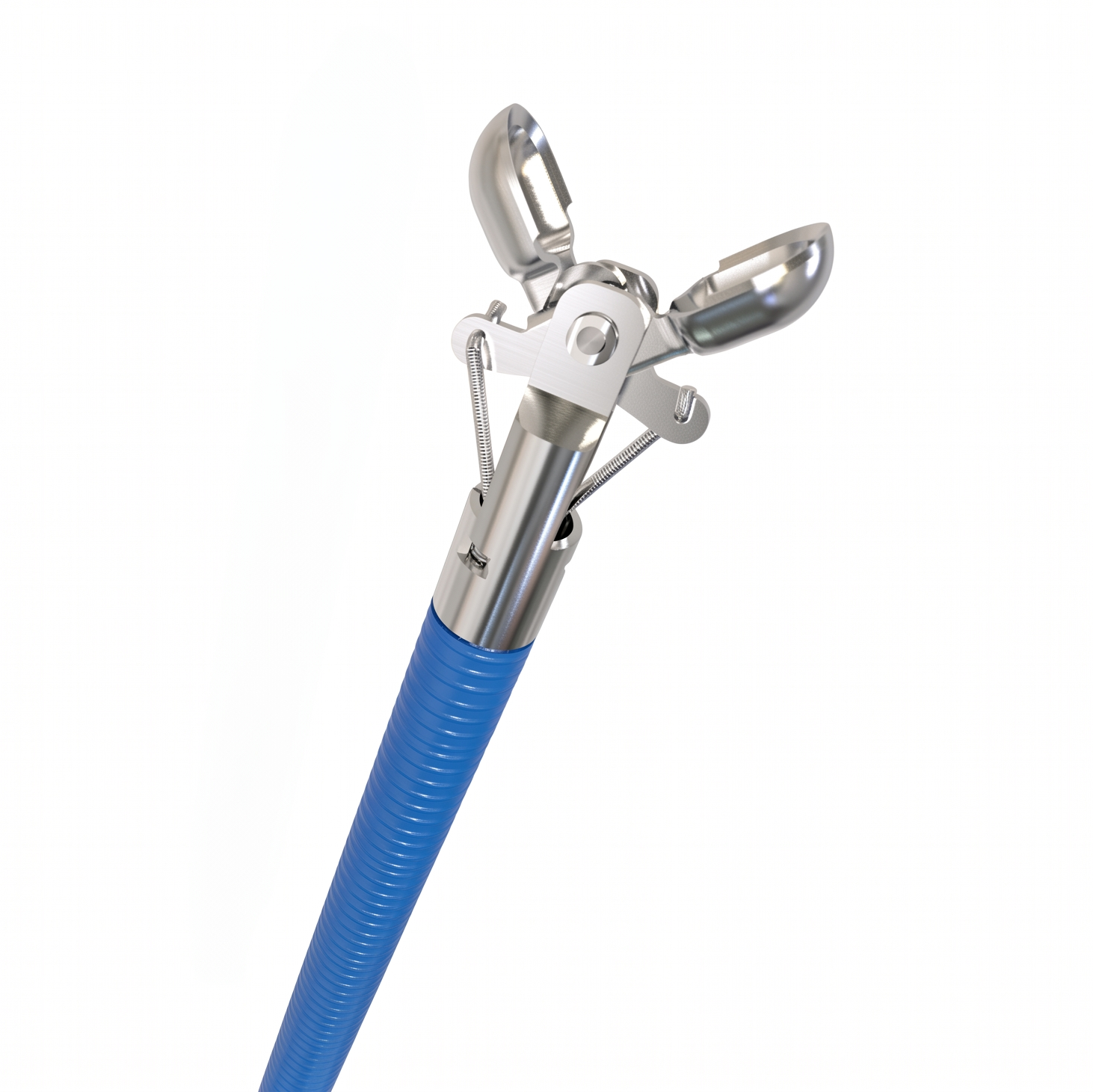
The KINDMED™ Biopsy Forceps are flexible endoscopic tissue sampling instruments consisting of a proximal control handle, slider mechanism, flexible sheath, actuation wire, and distal biopsy cups.
The handle and slider mechanism provide controlled opening and closing of the distal jaws to facilitate tissue capture and specimen retrieval.
Available jaw configurations may include:
Oval Fenestrated Cup with Spike
Designed to enhance tissue retention and specimen acquisition.
Oval Fenestrated Cup without Spike
Designed for atraumatic tissue sampling where spike-assisted capture is not required.
Alligator Jaw with Spike
Provides enhanced gripping capability for targeted tissue acquisition.
Alligator Jaw without Spike
Designed for controlled tissue sampling with reduced penetration.
Serrated Jaw with Spike
Offers improved tissue engagement and specimen retention.
Serrated Jaw without Spike
Provides controlled biopsy collection with serrated cutting surfaces.
The forceps are intended for insertion through compatible endoscope accessory channels according to the labeled specifications.
Contraindications
The device should not be used in the following situations:
- Significant coagulation disorders.
- Patients with uncontrolled bleeding tendencies.
- Severe inflammation or fragility of the gastrointestinal wall.
- Acute peritonitis.
- Gastrointestinal perforation.
- Intestinal obstruction.
- Active systemic infection or sepsis.
- Severe cardiopulmonary compromise.
- Recent gastrointestinal anastomosis.
- Pregnancy when procedural risks outweigh potential benefits.
- Situations where tissue sampling may present an unacceptable clinical risk.
The treating physician should determine patient suitability based on clinical evaluation.
Potential Adverse Events
Potential complications associated with endoscopic biopsy procedures include:
- Bleeding
- Perforation
- Infection
- Fever
- Sepsis
- Hypotension
- Allergic reactions
- Respiratory depression
- Respiratory arrest
- Cardiac arrhythmias
- Cardiac arrest
Additional risks related to sedation may include:
- Hypoxemia
- Hypercapnia
- Aspiration
The incidence of complications may vary depending on patient condition and procedural complexity.
Warnings
- Do not use if the sterile barrier or package has been damaged.
- The device is intended for single use only.
- Do not reuse, reprocess, or resterilize.
- Reuse may result in contamination, infection, device failure, or patient injury.
- Verify compatibility with the selected endoscope prior to use.
- Endoscopes with accessory channels smaller than the specified minimum diameter may damage the device.
- Ensure adequate visualization before advancing the forceps.
- Maintain the biopsy cups in the closed position during insertion and withdrawal.
- Use caution when obtaining tissue from areas with elevated bleeding risk.
- Appropriate measures for management of bleeding and airway protection should be readily available.
- Dispose of used devices according to institutional and regulatory requirements.
Precautions
- Review all instructions before use.
- Confirm compatibility with the endoscope working channel.
- Maintain the endoscope in as straight a configuration as possible during insertion and withdrawal.
- Operate the handle using controlled, gentle movements.
- Excessive force may damage the forceps or endoscope.
- Do not use the device for applications other than those described in this IFU.
- Inspect the device before use for damage or irregular operation.
Instructions for Use
Device Inspection
1. Carefully remove the device from its packaging.
2. Straighten the catheter without overstretching.
3. Operate the handle to verify smooth opening and closing of the biopsy cups.
4. Inspect the distal jaws for proper function and alignment.
5. Do not use the device if damage or abnormal operation is observed.
Tissue Sampling Procedure
1. Visualize the intended biopsy site endoscopically.
2. Insert the forceps through the endoscope accessory channel with the cups closed.
3. Advance the device until the distal cups are visible within the endoscopic field.
4. Position the forceps adjacent to the target tissue.
5. Open the biopsy cups and advance them gently into the tissue.
6. Close the cups to capture the specimen.
7. Withdraw the forceps while maintaining closure of the cups.
8. Retrieve the specimen according to institutional pathology protocols.
Device Removal
1. Maintain the cups in the closed position.
2. Withdraw the device carefully through the endoscope channel.
3. Inspect the forceps following removal.
4. Dispose of the device according to applicable regulations.
Change in Performance
If the device demonstrates altered functionality or no longer performs as intended, discontinue use immediately and determine further patient management according to physician judgment and clinical findings.
Storage Conditions
Store in a clean, dry, well-ventilated environment.
Protect from:
- Direct sunlight
- Excessive moisture
- Organic solvents
- Ionizing radiation
- Ultraviolet radiation
- Corrosive environments
Do not use beyond the expiration date indicated on the package labeling.
Disposal
After use, the device should be treated as potentially biohazardous waste and disposed of according to hospital, local, state, and national regulations.
Limited Warranty
KINDMED DEVICES PRIVATE LIMITED warrants that this product has been manufactured in accordance with established quality management procedures and applicable manufacturing standards.
Because storage conditions, transportation, handling, procedural techniques, patient factors, and other variables are beyond the manufacturer’s control, no guarantee is made regarding clinical outcomes.
The manufacturer’s liability is limited to replacement of defective products. KINDMED DEVICES PRIVATE LIMITED shall not be liable for incidental, indirect, special, or consequential damages arising from misuse, modification, reprocessing, resterilization, or reuse of the device.
Manufacturer
KINDMED DEVICES PRIVATE LIMITED
1st Floor, Plot No. 175B
Dada Nagar Industrial Area
Kanpur Nagar, Uttar Pradesh – 208022, India
KINDMED™ is a trademark of KINDMED DEVICES PRIVATE LIMITED.
