
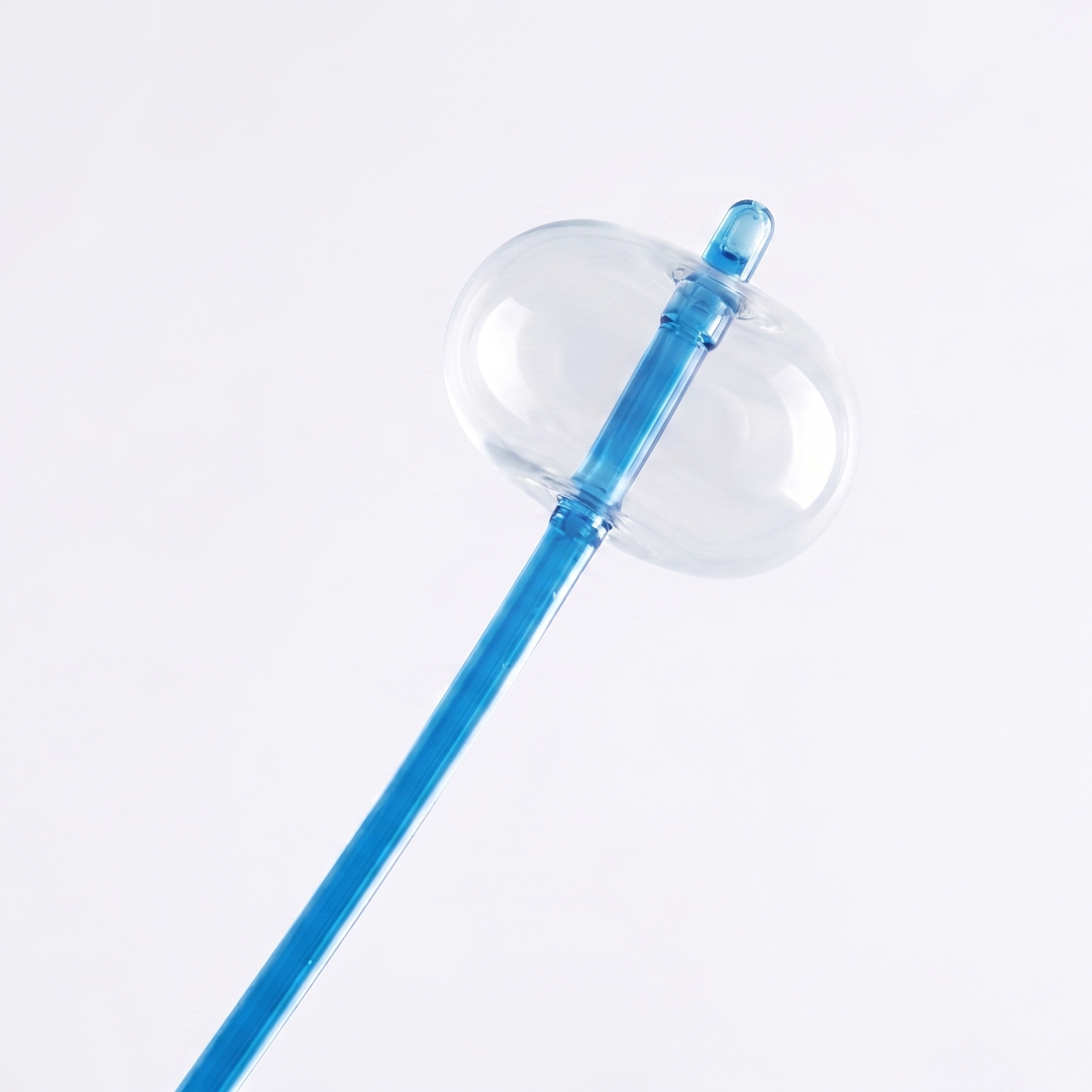
Features
- Dual contrast rings designed for clear visibility under X-ray imaging
- Platoid balloon design provides low resistance for smooth stone extraction
- Rapid exchange design for improved procedural efficiency
- Flexible and reliable balloon catheter construction
- Optimized for controlled stone retrieval procedures
- Sterile and single-use configuration
Applications
- Biliary Stone Extraction
- ERCP Procedures
- Gastrointestinal Endoscopy Applications
- Bile Duct Stone Removal
Technical Specifications
| Feature | Description |
|---|---|
| Device Type | Stone Extraction Balloon |
| Application | Endoscopic Biliary Stone Removal |
| Balloon Design | Platoid Low Resistance Balloon |
| Contrast Rings | Dual Contrast Rings for X-ray Visibility |
| Exchange Type | Rapid Exchange |
| Usage | Single Use Only |
| Sterility | Sterile |
| Working length (mm) | Min. working channel (mm) | Catheter max. O.D. (mm) | Inflation O.D. Range (mm) | Lumen QTY | Short wire sys. (Y/N) |
|---|---|---|---|---|---|
| 2000 | 3.2 | 2.4 | 10-12-15 | 3 | N |
| 2000 | 3.2 | 2.4 | 13-15-18 | 3 | N |
| 2000 | 3.7 | 2.4 | 10-12-15 | 3 | Y |
| 2000 | 3.7 | 2.4 | 13-15-18 | 3 | Y
|
Instructions for Use
Intended Use
The KINDMED™ Triple Lumen Stone Extraction Balloon is intended for endoscopic retrieval of biliary stones and debris from the common bile duct during ERCP procedures. The device may also be used for controlled dilation of the sphincter region and for contrast injection when clinically required.
The device is supplied sterile and intended for single-patient use only.
Device Description
The KINDMED™ Triple Lumen Stone Extraction Balloon is a wire-guided endoscopic accessory designed for biliary stone extraction procedures.
The device features a triple-lumen catheter configuration comprising:
- Guidewire lumen
- Balloon inflation lumen
- Contrast injection lumen
The distal portion of the catheter incorporates an inflatable extraction balloon positioned between radiopaque markers to facilitate fluoroscopic visualization and accurate placement.
The proximal end contains dedicated access ports for:
- Guidewire insertion
- Balloon inflation
- Contrast media administration
The catheter is designed to permit controlled balloon inflation and stone extraction under endoscopic and fluoroscopic guidance.
Contraindications
The device should not be used in the following situations:
- Use within the central cardiovascular system.
- Severe coagulation disorders.
- Patients who have not undergone appropriate fasting before the procedure.
- Severe gastrointestinal inflammation or tissue fragility.
- Acute peritonitis.
- Gastrointestinal perforation.
- Intestinal obstruction (ileus).
- Active sepsis.
- Severe cardiopulmonary compromise.
- Uncontrolled bleeding disorders.
- Recent gastrointestinal anastomosis.
- Pregnancy when procedural risks outweigh potential benefits.
- Known hypersensitivity to latex-containing components (where applicable).
The treating physician should determine suitability based on individual patient assessment.
Potential Adverse Events
Potential complications associated with biliary stone extraction procedures include:
- Mucosal injury
- Tissue trauma
- Bleeding
- Perforation
- Ulceration
- Tissue necrosis
- Stricture formation
- Allergic reactions
- Pancreatitis
- Cholangitis
- Aspiration
- Infection
- Hemorrhage
- Respiratory depression
- Cardiac arrhythmias
- Cardiac arrest
- Stone impaction
- Localized inflammation
- Pressure-related tissue injury
Additional complications associated with ERCP procedures may also occur.
Warnings
- Do not use if packaging integrity has been compromised.
- For single use only.
- Do not reuse, reprocess, or resterilize.
- Reuse may result in contamination, infection, device malfunction, or patient injury.
- Inspect all components prior to use.
- Do not use damaged or defective devices.
- Use only within the specified technical parameters and intended indications.
- Avoid excessive bending, kinking, twisting, or mechanical stress.
- Do not force the device through the endoscope channel.
- If contamination occurs before use, discard the device immediately.
- Latex-containing components may cause allergic reactions in susceptible individuals.
- Always follow institutional infection-control protocols.
Precautions
- Read all instructions before use.
- Ensure compatibility between the device diameter and the endoscope working channel.
- The minimum recommended working channel size is 2.8 mm.
- Use appropriate protective equipment during the procedure.
- The procedure should be performed only by physicians trained in ERCP and biliary stone extraction techniques.
- Verify compatibility between the selected guidewire and guidewire lumen.
- Assess stone size and anatomy before treatment.
- Consider sphincterotomy when clinically indicated.
- Monitor contrast injection fluoroscopically to minimize the risk of pancreatitis.
- Perform a functional inspection of the device before patient use.
Instructions for Use
Preparation
- Remove the device from its sterile packaging using aseptic technique.
- Inspect the catheter and balloon for damage.
- Confirm compatibility with the selected guidewire and endoscope.
- Ensure the balloon is completely deflated prior to insertion.
Placement
- Introduce the catheter over the guidewire through the endoscope working channel.
- Advance the device into the biliary system under fluoroscopic and/or endoscopic guidance.
- Position the balloon beyond the stone intended for extraction.
Balloon Inflation
- Connect an appropriate inflation syringe to the inflation port.
- Inflate the balloon gradually while monitoring fluoroscopic positioning.
- Inflate only within the recommended balloon capacity limits.
- Secure the inflation system to maintain balloon expansion.
Stone Extraction
- Withdraw the inflated balloon gently toward the duodenum.
- Capture and remove one stone at a time whenever possible.
- Repeat the procedure as necessary for additional stones.
- Monitor patient response throughout the procedure.
Balloon Deflation and Removal
- Deflate the balloon completely.
- Confirm complete evacuation of inflation media.
- Carefully remove the catheter through the endoscope.
- Inspect the device after removal.
Note: Sharp or large calculi may damage the balloon and may require alternative extraction techniques such as basket retrieval or lithotripsy.
Multi-Size Balloon Operation
For adjustable-diameter balloon models:
- Inflate the balloon under fluoroscopic visualization.
- Confirm duct occlusion and appropriate balloon sizing.
- Adjust balloon diameter using the inflation system according to the device labeling.
- Maintain inflation pressure within the specified limits.
Change in Performance
If the device fails to perform as intended or exhibits altered functionality, discontinue use immediately and determine further patient management according to physician judgment and clinical findings.
Storage Conditions
Store in a clean, dry environment at normal room temperature.
Protect from:
- Direct sunlight
- Excessive heat
- Moisture
- Mechanical damage
Observe stock rotation procedures and do not use beyond the expiration date.
Disposal
After use, the device should be treated as potentially biohazardous waste and disposed of according to hospital, local, state, and national regulations.
Limited Warranty
KINDMED DEVICES PRIVATE LIMITED warrants that this product has been manufactured in accordance with established quality management procedures and applicable manufacturing specifications.
Because storage conditions, transportation, handling, procedural techniques, and patient-specific factors are beyond the manufacturer’s control, no guarantee is made regarding clinical outcomes.
The manufacturer’s liability is limited to replacement of defective products. KINDMED DEVICES PRIVATE LIMITED shall not be liable for incidental, indirect, special, or consequential damages arising from misuse, modification, reprocessing, resterilization, or reuse of the device.
Manufacturer
KINDMED DEVICES PRIVATE LIMITED
1st Floor, Plot No. 175B
Dada Nagar Industrial Area
Kanpur Nagar, Uttar Pradesh – 208022, India
KINDMED™ is a trademark of KINDMED DEVICES PRIVATE LIMITED.
